

Thank you for taking part in Portland NET’s 2025 Fall Citywide Deployment Exercise!
Like our last Spring CDE, we’re combined teams spanning six separate neighborhoods. The last spring CDE turned out to be safe, exciting and successful. Well, our fall CDE registration was the same, totaling 196 CDE registrations and 21 within our Southwest Combined Teams (SWCT). We’ll also had one SUV taking part from Beaverton CERT! The Citywide Deployment Exercise (CDE) was a great success! Below’s a link to the Exercise Coordinators/Proctors’ Report taking in the hotwash group discussion topics. The photos from the CDE are posted below. After seeing the photos, please review the drafted report: SWCT Proctor Worksheet.docx For any suggestions regarding the content, please email: firstresponders@hayhurstnet.com
Again, everyone, great teamwork and dedication. I think it was a big success, with many fantastic takeaways that I look forward to reflecting on during our next NET meeting. Details of the next NET meeting will be passed on soon. Please also attend the hotwash scheduled for Wednesday, 11/12. See below to sign up!
Events to note:
- An advanced training was completed 11/05, Getting Organized! provided by NET Team Leaders Brenda Nuckton and Greg Zupan telling us how their teams organize forms during deployment. Here are links to the full training session recorded and training materials:
- 11/12, CDE Hotwash – During the Wednesday night virtual training, sign up in MIP under Opportunities > Calendar to find a Zoom registration link including the event description. Hope you can make it! Contact firstresponders@hayhurstnet.com if any questions.
Objectives:
Our core purpose when activated is to coordinate first response within our community and communicate with Form 201 to the PBEM Emergency Operations Center (EOC):
– Collaborative decision-making considering compassion and understanding.
– Agile strategic and tactical planning while facing ambiguity.
– Improvisational application of Incident Command System (ICS) methodology.
Looking forward to seeing the SWCT at the 2026 Spring Citywide Deployment Exercise!
History of Prior CDEs
Fall 2025 Preparation Info
To help prep for CDE, please check your NET gear and be sure that you have your responder vest, NET ID, hard hat, and a water bottle filled and ready, as well as, verifying the additional gear that you suspect may be needed. Make sure you bring a clipboard, pen or pencil, and a collapsible chair.
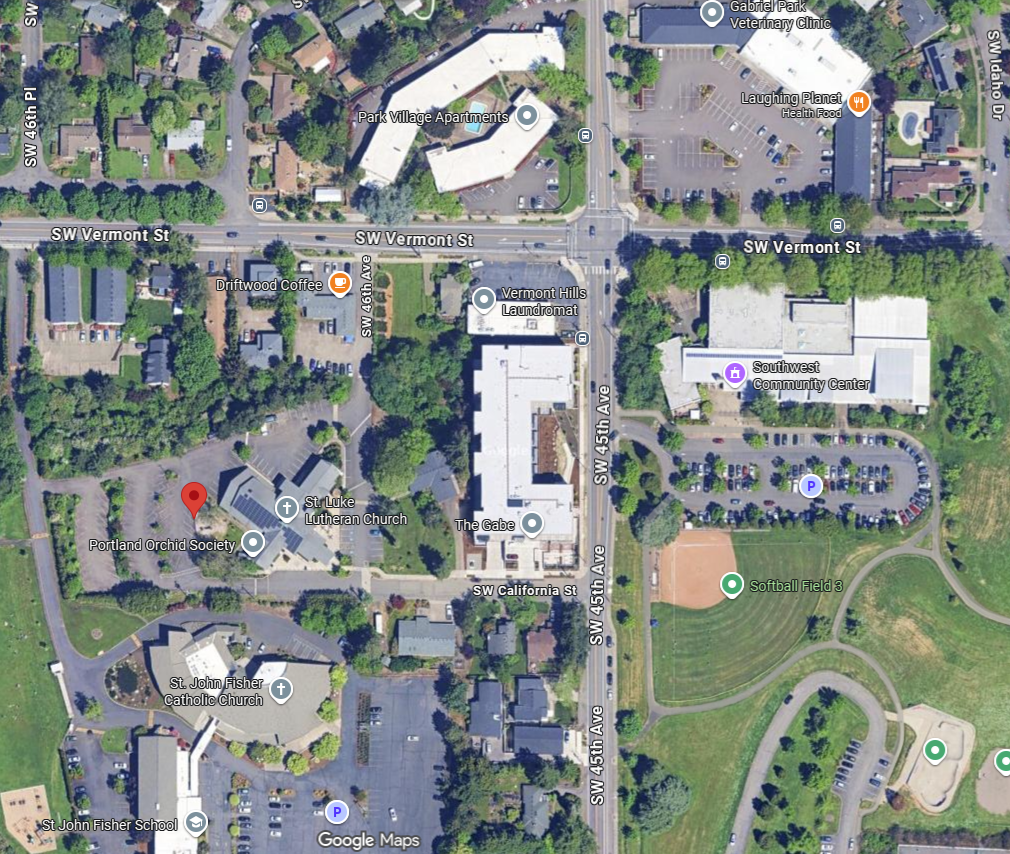
- 11/09, Fall 2025 Citywide Deployment Exercise (CDE) at 1PM to 4PM at alternate Staging Area St. Luke Lutheran Church 4595 SW California Street Portland, OR 97219-1690 We assembled 12:00-12:30PM at the staging area (see the red marker on the map image in the above link) to set up one or more canopy tents, along with at least three tables.
- Thanks to Ed K for reminding us that with the time change, overcast, and getting dark by 3pm. Being that we’ll operate till about this 3:45pm and needing to tear down, be sure to bring flashlights in your packs and also tent lights to be sure we’re ready for early dusk conditions.
- Here’s a link to the Maplewood Ops Plan: https://www.portland.gov/pbem/neighborhood-emergency-teams/documents/maplewood-net-ops-plan/download (key point – use Channel 18 for Radio Check-in** while in route to Staging Area: St Luke Lutheran Church (4595 SW California St, Portland, OR 97219). Please feel free to considering filling in Form 1 while enroute and during radio check-in: https://volunteerpdx.net/index.php/NET_Incident_Command_System_(ICS)_Forms#NET_Form_1:_Damage_Assessment_Form
- For context details will be provided upon activation. You should be aware that the CDE scenario will be 48-hours after the event and we’ll be passed a Form 201 for an Incident Briefing at 1:15PM.
- We can only use the St Luke facility restrooms, thus despite the weather everyone will need to be stationed outside the facility. Bring rain gear and dress in layers.
- ARO Jesse E will need to provide Ham Radio power independently.
- Along with normal NET gear, please be sure to bring water, snacks, clipboard, writing utensil, and a collapsible chair.
- Spontaneous Unaffiliated Volunteers (SUV) can take part in this CDE and are welcome. Registration is closed, so you’ll just have to sign up as an SUV regardless of NET, BEECN, ATV, etc. status.
- The debriefing will start at 3:45, and conclude by 4pm, and everyone is welcome, but not required, to join us at the Old Market Pub & Brewery (https://maps.app.goo.gl/Fvo46qG5rKj33Mff9) for a post exercise gathering.
- FYI
- For general Portland ICS protocol questions raised, please peruse the WikiNET for answers. A) Everyone starting with printing out a set of the base NET Forms referenced here: NET Incident Command System (ICS) Forms – WikiNET B) For Amateur Radio Operators, please have a three-ring binder containing the ARO Standard Operating Procedures – WikiNET along with the NET Forms.
- If you’d like a quick introduction to ICS, review the Hayhurst NET Introduction.pdf and also this CDE 2025 Workflow Diagram that gives a high-level general ICS operations overview with a business lens. To clarify ICS from the incident commander perspective, check out this ITL training: 2025.04.30 CDE prep – What Does An ITL Do? on Vimeo Lastly, if you have 2 hours free, the FEMA IS-100.C training can be found on http://hayhurstnet.com (final link on the bottom of the left column)
- Radio Check-in** will be on Channel 18
- Be sure to charge your radios. Even if you cannot activate, please turn on your radio and check in. Everyone from all neighborhoods should turn their radio on to channel 18. There will likely be Net Control and will call for check-ins starting at 1:00. Depending on the NC we may need “relays”. This is an example of what our radio check-in exercise will be:
- Net Control: “This is Brian, (call sign), Net Control for our cross-team NET radio check-in. I am ready to take check-ins now. Please state your neighborhood, first name, and nearest intersection, followed by GMRS call sign and unit number.” (Only the GRMS radio users will have a call sign. For example, a family might have more than 1 person on air using the same call sign so if two people it could be “Unit 1” and “Unit 2”.)
- How to check in: First name + team name + location of nearest cross street + GMRS call sign plus unit number.
- How to “relay”:
- If Net Control can’t hear a station, but you can, please say “RELAY”. Net Control will recognize you, then you can relay the check-in.
- Example of a relay:
- Net control: “Are there any check-ins?”
- “Dave on Peyton Rd. and SW 63rd Ave”
- Net Control: “…Nothing heard”
- Bob: “Relay”
- Net Control: “Relay Go ahead”
- Bob: “I hear Dave on Peyton Rd. and SW 63rd Ave. “
- Net Control: “Copy that, I have Dave checked in.”
- Bob: “Relay, Dave you are checked in.”
- Dave: “I roger your message, I am checked in.”
- Bob: “Confirmed”
- According to FCC:
- Every GMRS or Ham station must transmit a station identification . . . following the transmission of communications or a series of communications and/or every 15 minutes during a long transmission. (That’s stations, not licensees.) Number may be included after the call sign in the identification. For example: Jack would be: ABCD123-Unit 1 and Jane would be ABCD123-Unit 2. A lengthy call sign – 4 letters, 3 numbers, followed by a unit number. The good thing is that it can be given just every 15 minutes after a series of transmissions or during a lengthy transmission.
- Be sure to charge your radios. Even if you cannot activate, please turn on your radio and check in. Everyone from all neighborhoods should turn their radio on to channel 18. There will likely be Net Control and will call for check-ins starting at 1:00. Depending on the NC we may need “relays”. This is an example of what our radio check-in exercise will be:
Upon activation, we assembled at SWCT’s alternate Staging Area St Luke Lutheran Church (4595 SW California St, Portland, OR 97219) red marker shown in the map below.
SWCT Volunteer Roles
Southwest Combined Teams (SWCT) Exercise Coordinator – Greg Z / Patrick P
Incident Team Lead (ITL) – Dave K
ITL Scribe – Emma R
Ops Section Chief – Kandy S
Spontaneous Unaffiliated Volunteer (SUV) coordinator – Katie S
Amateur Radio Operator (ARO) – Jesse E
ARO Scribe – Candice E
FRS Communications – Irene J
Strike Team (A) Yellow Lead – Beth B
Strike Team (A) Yellow FRS – Meredith F
Strike Team (B) Blue Lead – N/A
Strike Team (B) Blue FRS – N/A
Strike Team (C) Red Lead – Ed K
Strike Team (C) Red FRS – TBD
Fall 2025 Photos


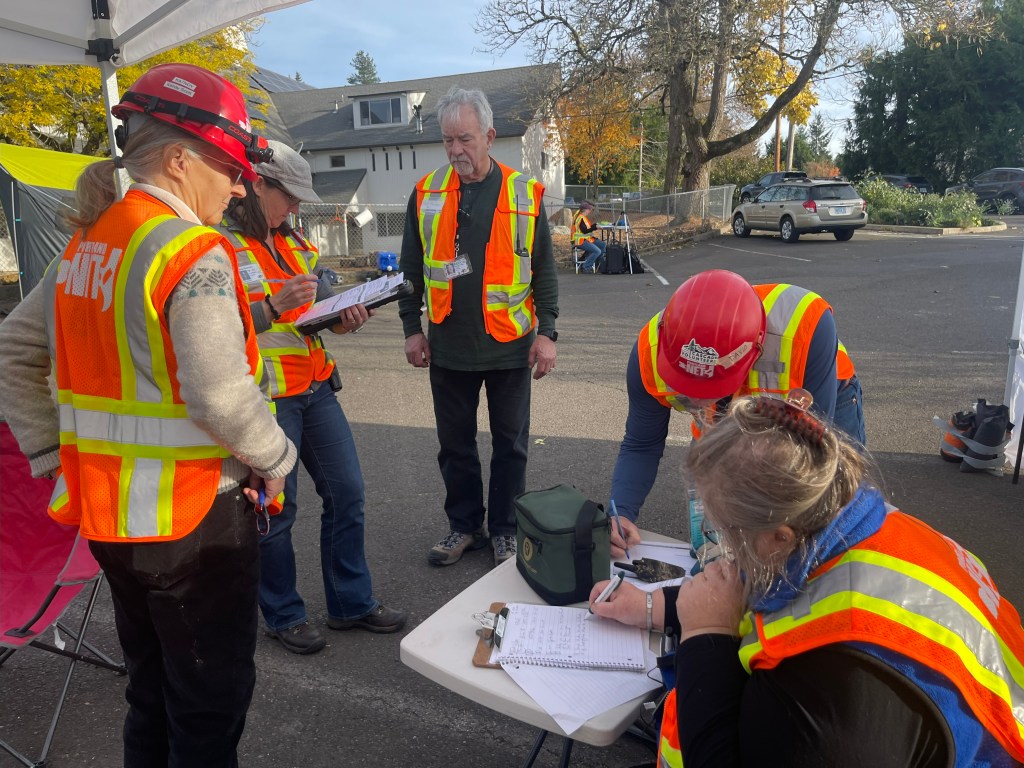
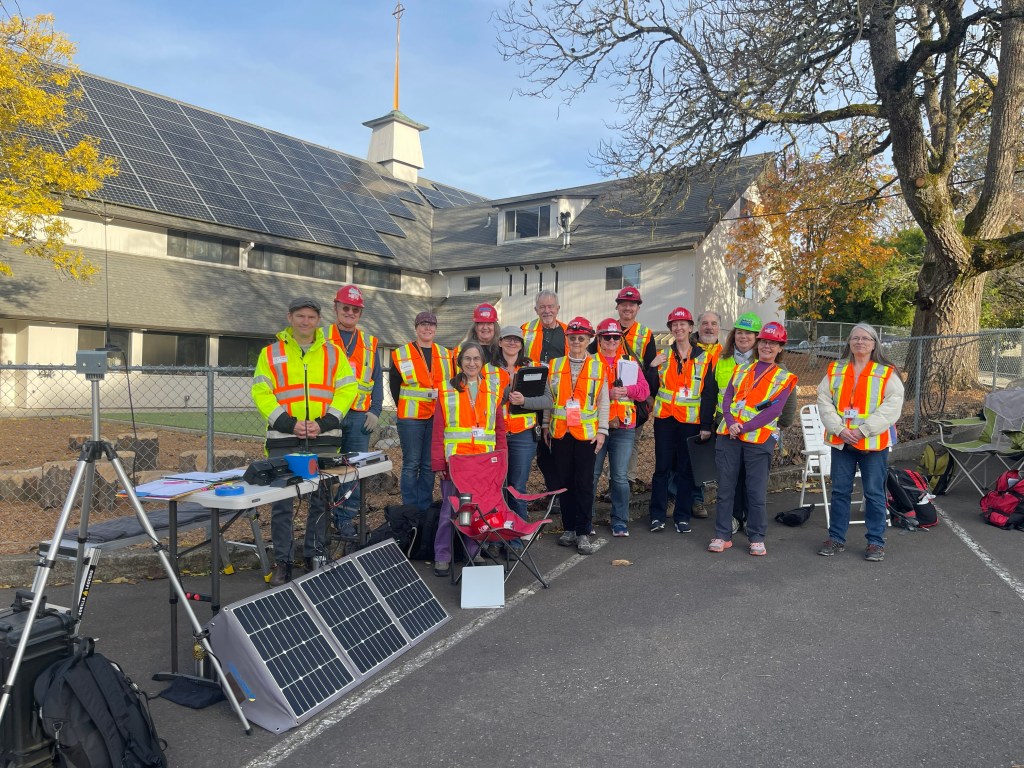
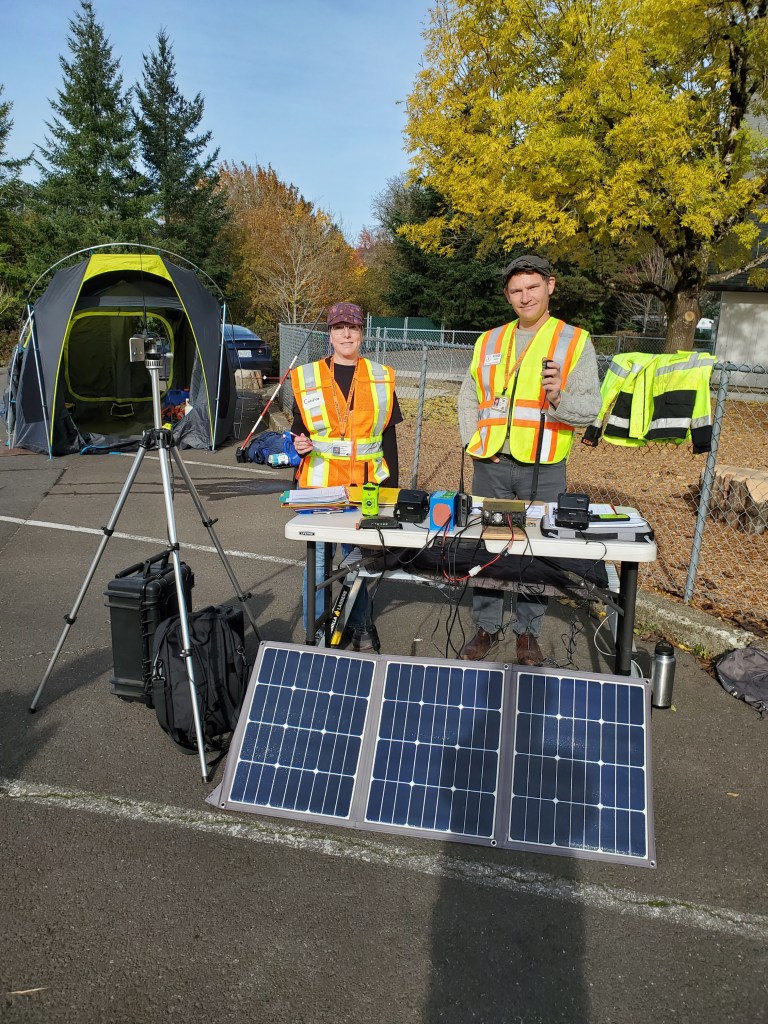
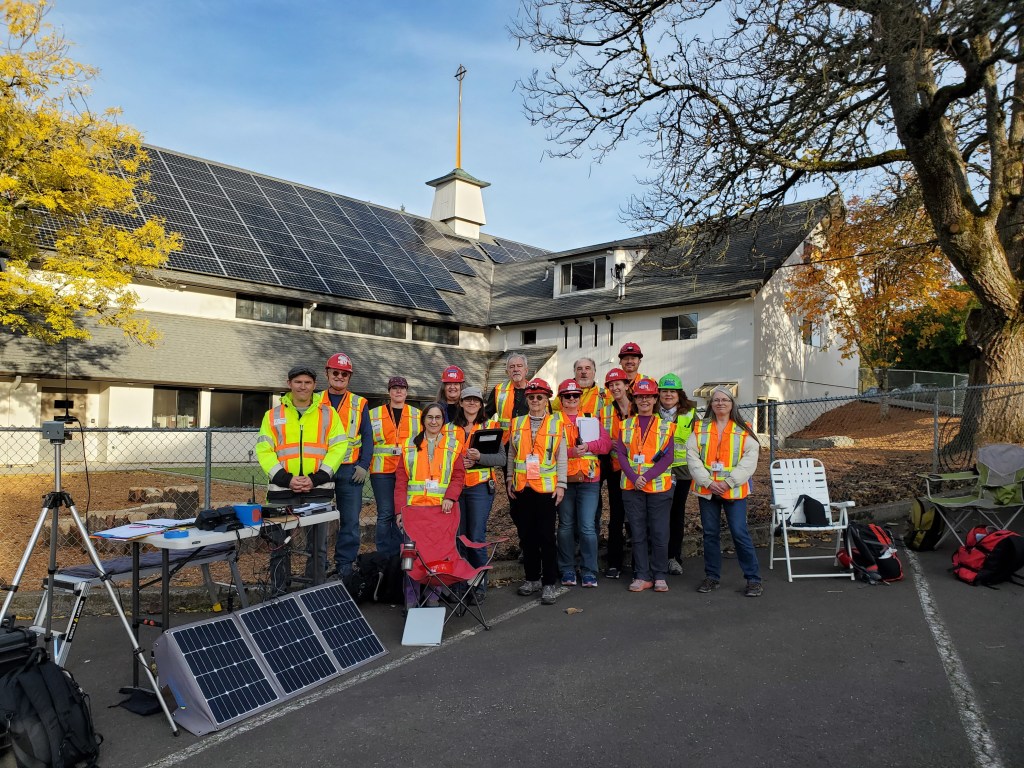
Volunteers for 2025 Fall CDE
Spring 2025 Prep Info
To help prep for CDE, please check your NET gear and be sure that you have your responder vest, NET ID (Tigard CERT ID accepted also), hard hat, and a water bottle filled and ready, as well as, verifying the additional gear that you suspect may be needed.
- If 80 degrees or hotter, Log In to MIPS: https://app.betterimpact.com/Login/Login?returnUrl=/Volunteer/Main/GenericLogOut&agencyGuid=5c003f3a-8d04-4cdf-b8c0-41627fea7871&utm_source=assignment&utm_medium=email&utm_campaign=beecn, select Opportunities > Opportunities List and scroll down to complete the Heat Illness Prevention Training.
- Especially those not well versed with Portland’s Hayhurst neighborhood, please review and print out, to have on person, this key information during the CDE: HayhurstNET Brochure 03102023.pdf [FYI, if desired, additional Ops Plan details can be found here, please do NOT print: HayhurstNET Ops Plan 03102023.pdf (NOTE: FRS/GMRS channel information may be different for CDE]
- For general Portland ICS protocol questions raised, please peruse the WikiNET for answers. A) Everyone starting with printing out a set of the base NET Forms referenced here: NET Incident Command System (ICS) Forms – WikiNET B) For Amateur Radio Operators, please have a three-ring binder containing the ARO Standard Operating Procedures – WikiNET along with the NET Forms.
- If you’d like a quick introduction to ICS, review the Hayhurst NET Introduction.pdf and also this CDE 2025 Workflow Diagram that gives a high-level general ICS operations overview with a business lens. To clarify ICS from the incident commander perspective, check out this ITL training: 2025.04.30 CDE prep – What Does An ITL Do? on Vimeo Lastly, if you have 2 hours free, the FEMA IS-100.C training can be found on http://hayhurstnet.com (final link on the bottom of the left column)
PBEM, Emergency Operations Center (EOC) radio room support – Bruce S
West Subnet Control (SNC) – Kandy S, SNC scribe and assistant – Brian S
Southwest Combined Teams (SWCT) Exercise Coordinator/Proctor – Greg Z
SWCT:
Incident Team Lead (ITL) – Candice E
Co-ITL – Tom B
ITL Scribe – Beth BC
Spontaneous Unaffiliated Volunteer (SUV) coordinator – Greg Z
Amateur Radio Operator (ARO) – Ed K
ARO Scribe – Ed K
FRS Communications – Irene J
FRS Scribe – Jack K
Strike Team Yellow Lead – Adam P
Strike Team Yellow FRS – Bob M
Strike Team Blue Lead – Dave K
Strike Team Blue FRS – Dennis S
Photos from Spring 2025 CDE
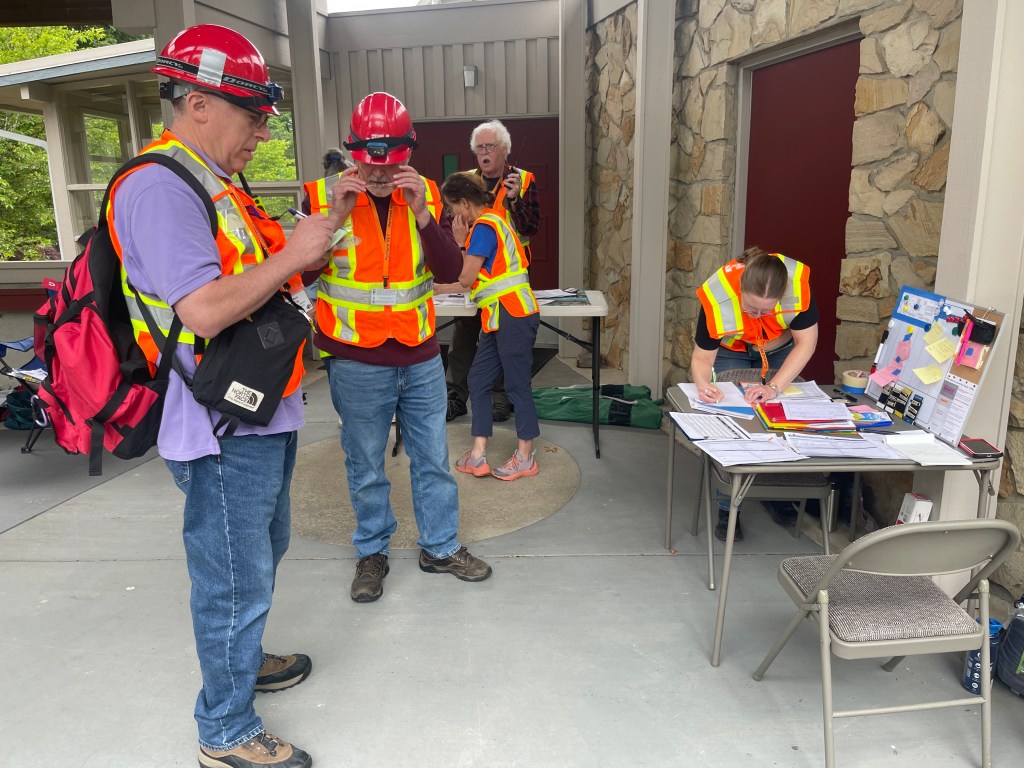
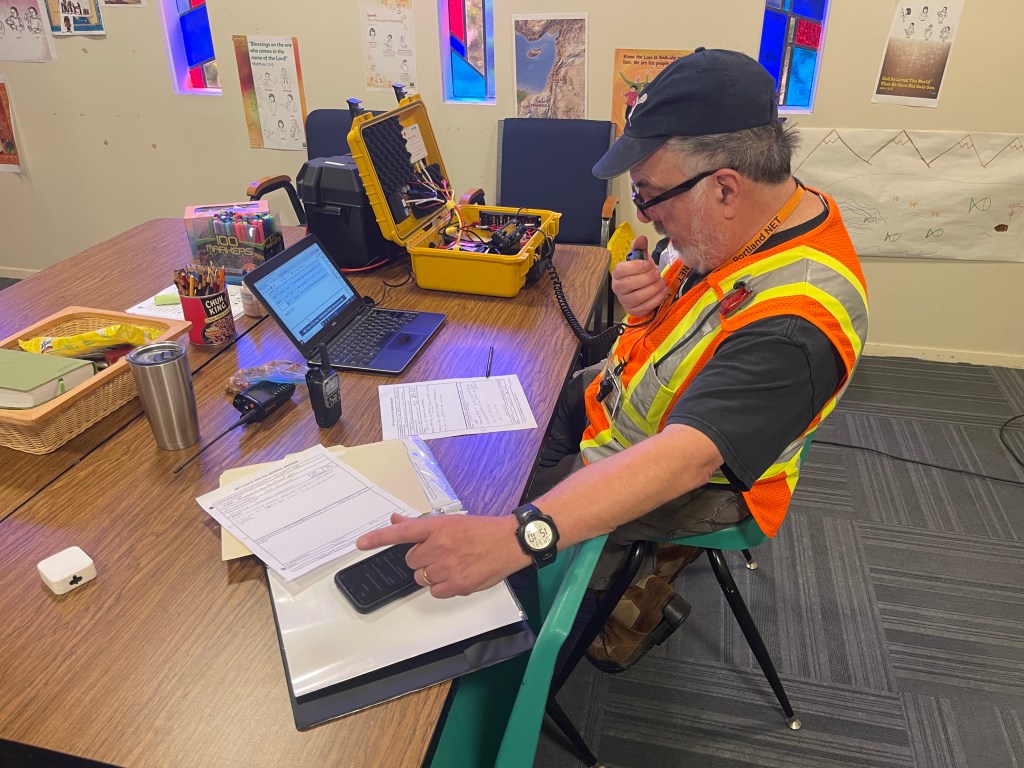
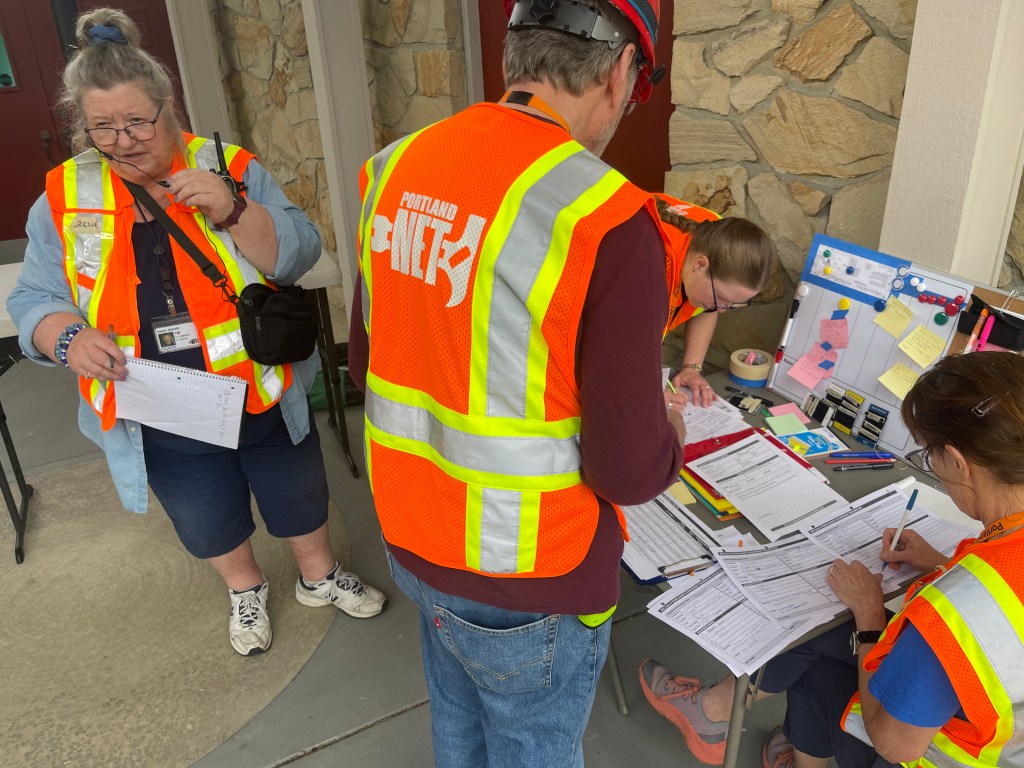
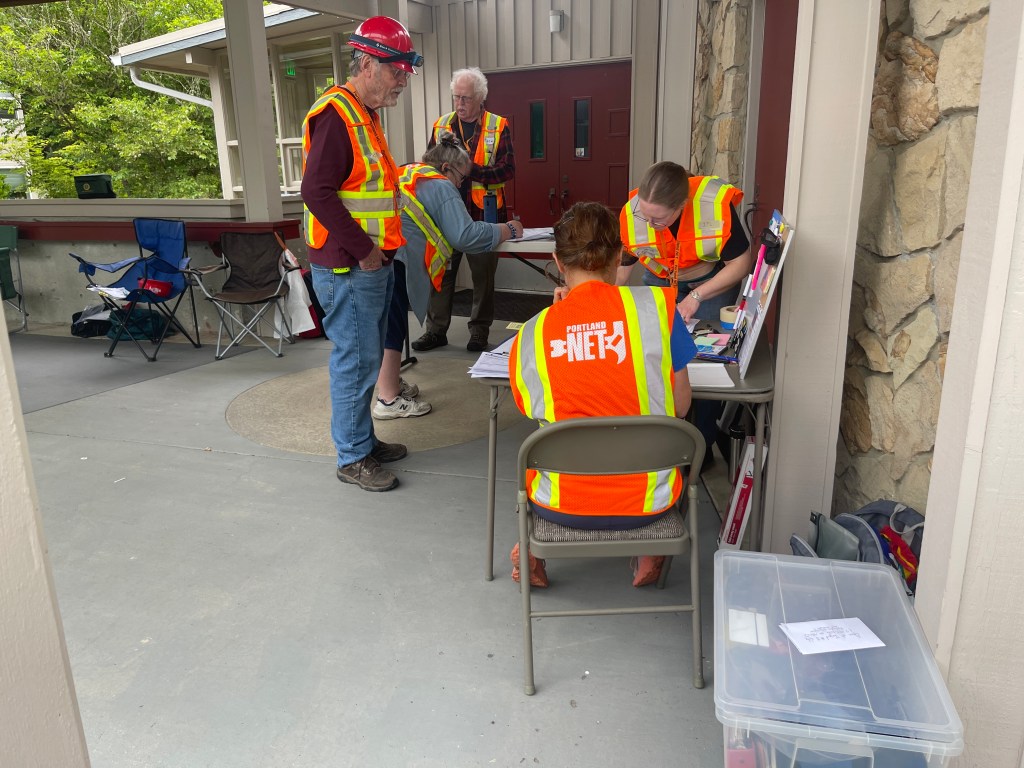
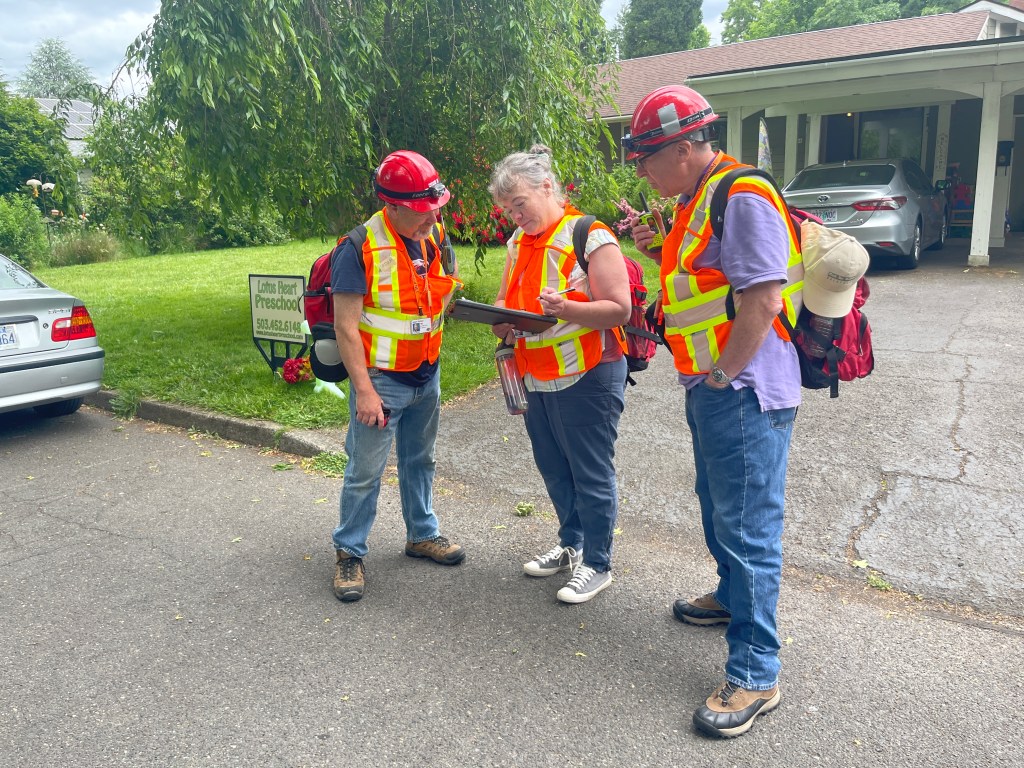
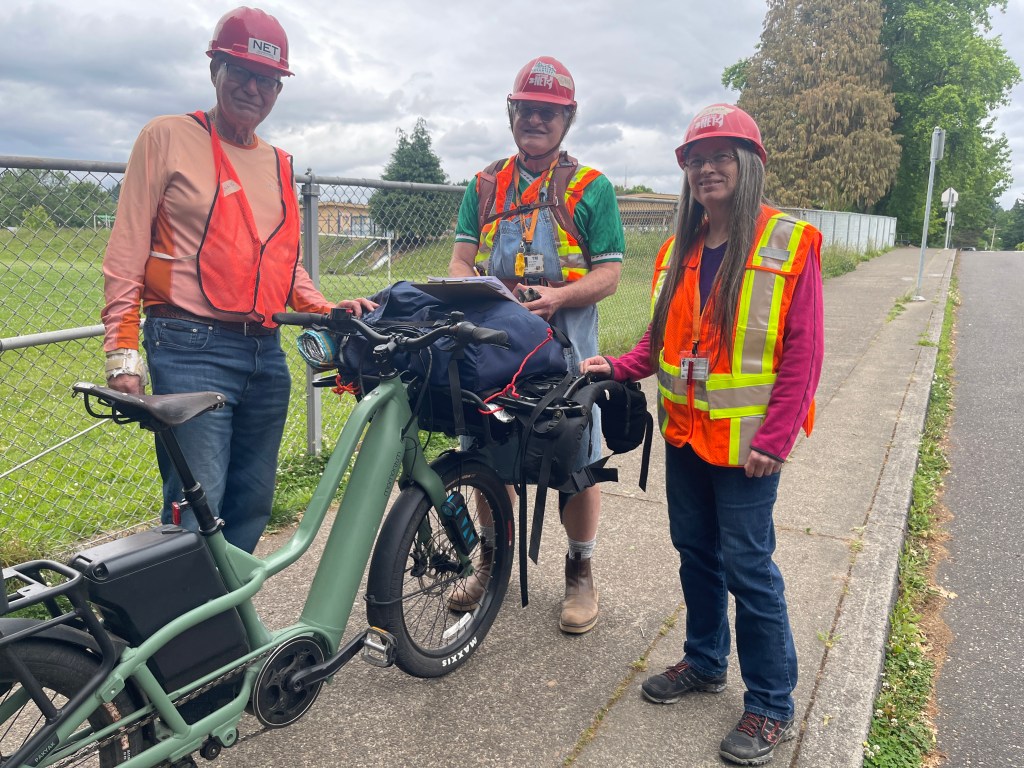
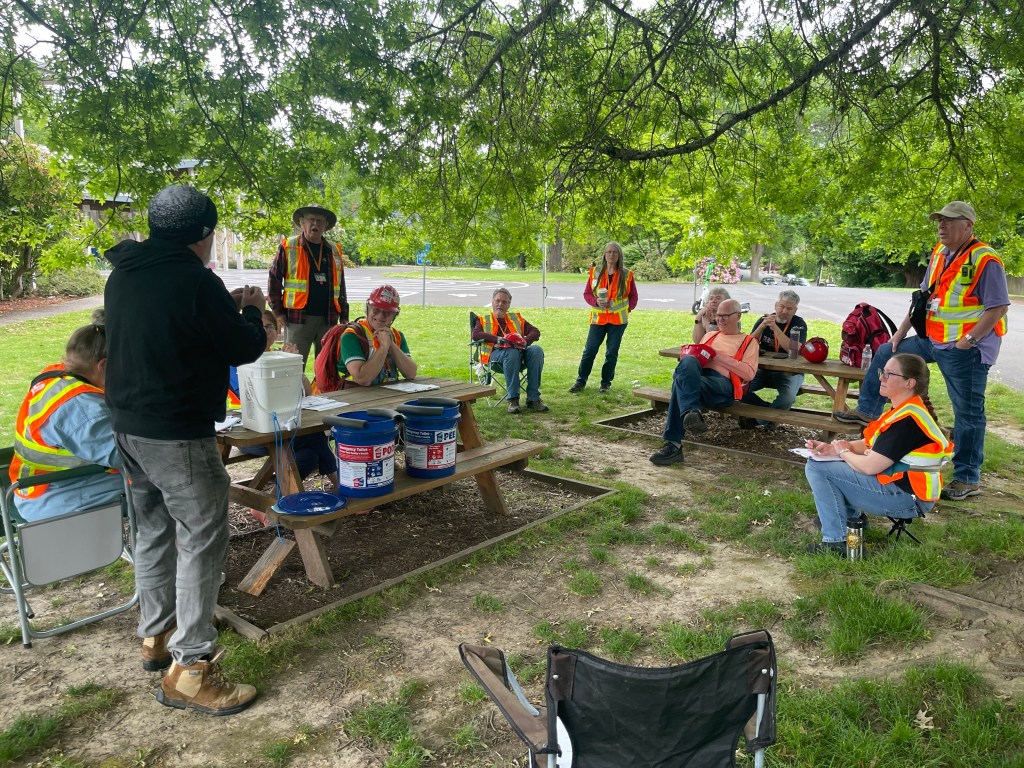
Volunteers for Spring 2025 CDE
 Portland Hayhurst Neighborhood Emergency Team